 Stable Diffusion
 Leonardo AI
 Kittl
Kittl Canva AI
 Adobe Express
 Photoroom
 Krea AI
 Fotor
Fotor Topaz Photo AI
 Ideogram 2.0
 Phot.AI
 OpenArt AI
 NightCafe
 LetsEnhance
 Midjourney AI
 CHATGPT
 Magnific
Krea 2 Medium — real-world prompt tests
four demanding prompts, scored honestly
We ran Krea 2 Medium — Krea's mid-tier image model — against four deliberately demanding prompts — a photoreal portrait, exact text rendering, multi-panel character consistency, and extreme macro detail — and scored each on content match (did it include what was asked?) and visual quality & integrity (does it hold up as a real image?). Three passed and one failed, and we show the failure too. These are our own tests, not marketing renders.
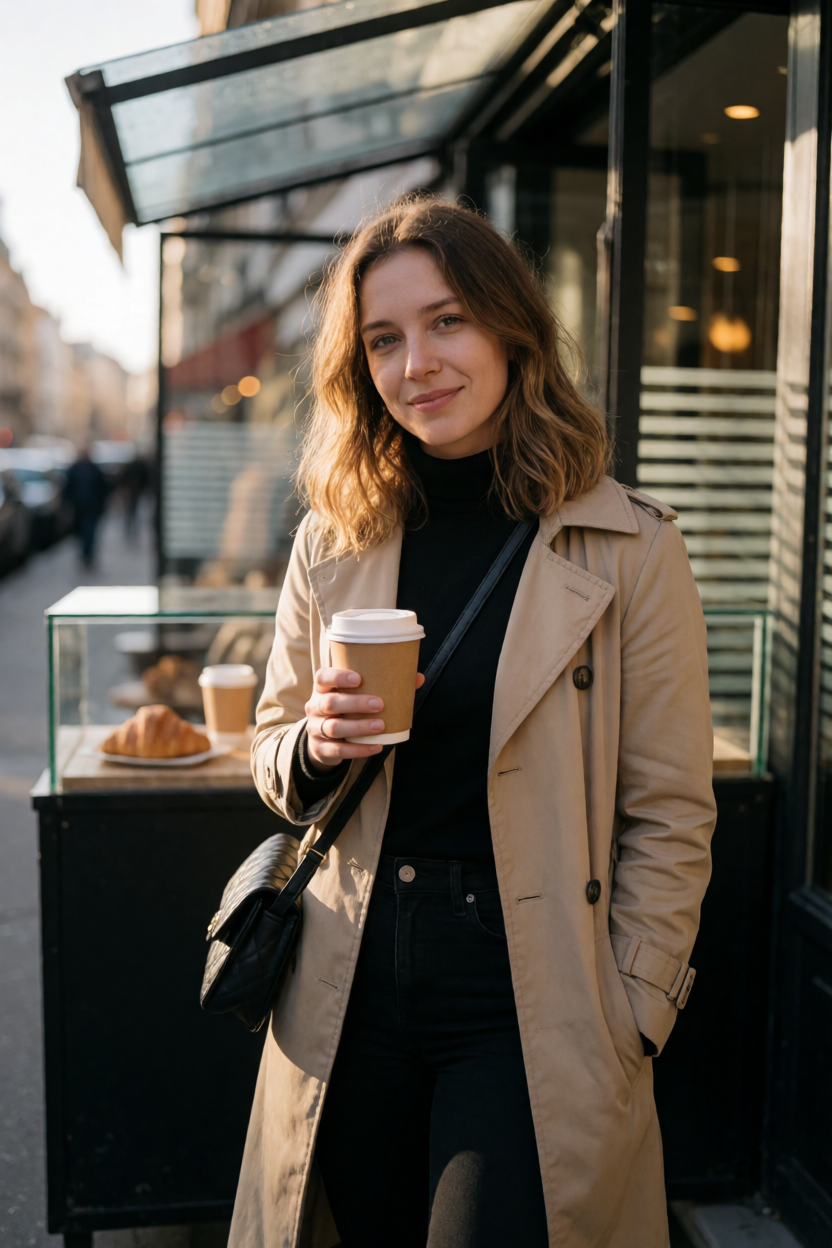
Prompt: "A candid street portrait of a 27-year-old woman standing outside a small Paris café during golden hour, wearing a beige trench coat and holding a takeaway coffee… 85mm f/1.4, natural skin texture, anatomically correct hands, shallow bokeh, ultra-photorealistic, RAW quality."
Content match — 85/100: all entities present (woman, beige trench coat, takeaway coffee, street café); golden-hour light evident. Camera specs can't be verified from pixels.
Visual quality — 92/100: genuine candid look, warm directional light, sharp subject with intentional bokeh, anatomically correct hands, subtle flyaway hairs and realistic eye reflections.
Verdict: Convincing and natural — one of Krea 2 Medium's strongest results.
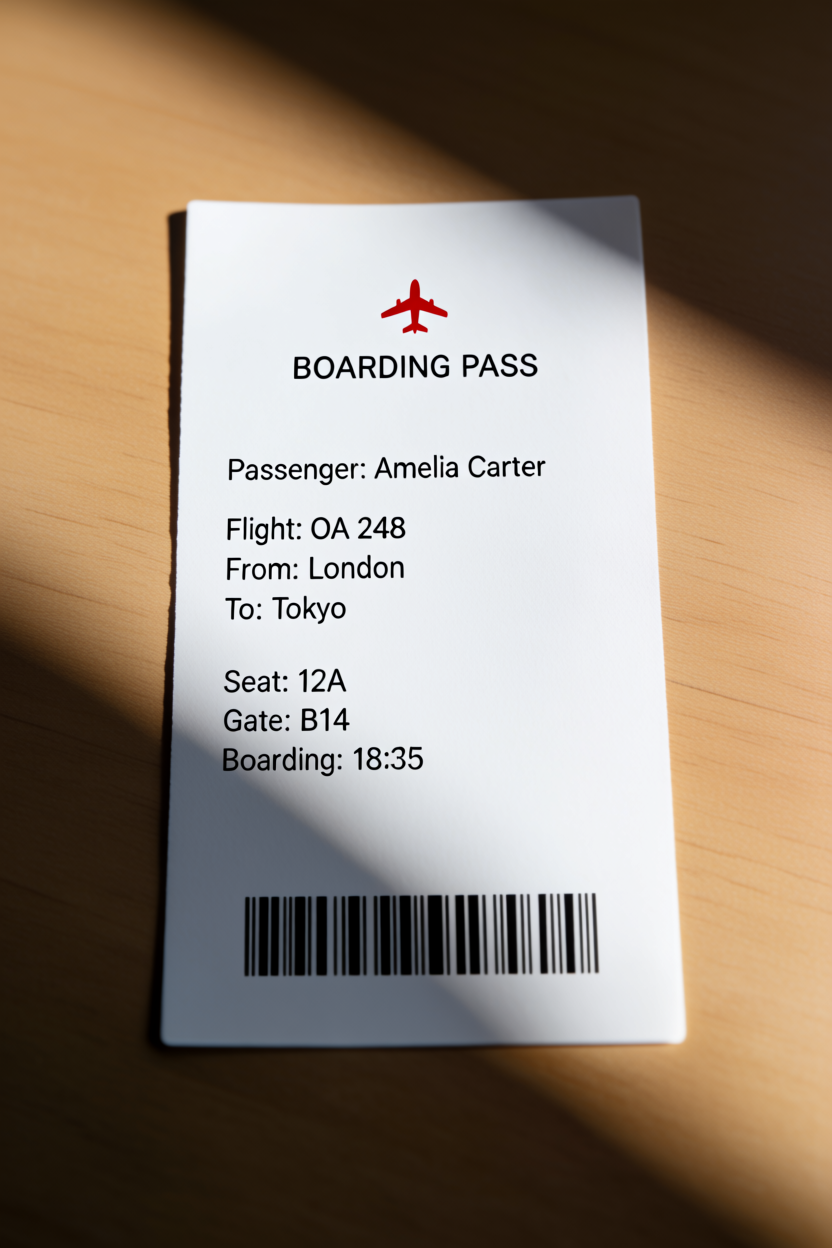
Prompt: "Design a minimalist airline boarding pass on a wooden desk containing exactly this text: BOARDING PASS · Passenger: Amelia Carter · Flight: OA 248 · London → Tokyo · Seat 12A · Gate B14 · Boarding 18:35. Clean airline typography, perfect spelling and spacing. Photorealistic cardstock."
Content match — 95/100: every field rendered with correct spelling (Amelia Carter, OA 248, London→Tokyo, 12A, B14, 18:35); clean typography, barcode, wooden-desk surface.
Visual quality — 92/100: sharp text, natural directional shadows, realistic paper texture, proper perspective and alignment.
Verdict: Excellent — accurate, readable text is a genuinely hard test, and Krea 2 nailed it here.
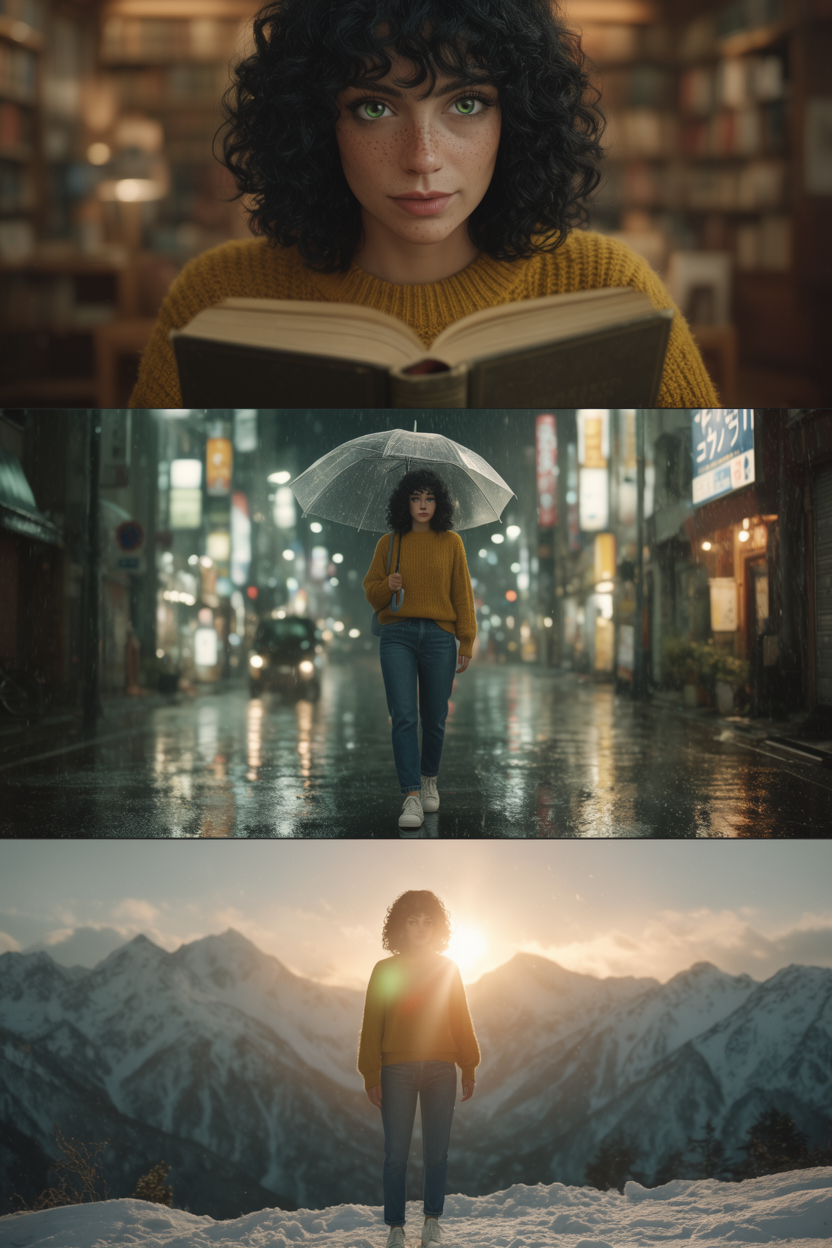
Prompt: "A cinematic triptych featuring the same woman in every panel — shoulder-length curly black hair, green eyes, freckles, mustard-yellow sweater, blue jeans, white sneakers. Panel 1: library; Panel 2: rainy Tokyo street with a transparent umbrella; Panel 3: snowy mountain at sunrise. Identity must remain identical across all three."
Content match — 85/100: all three scenes, props, and the described features are present and the triptych layout is correct.
Visual quality — 60/100: the failure point. Cinematically graded, but with clear CGI tells — unnaturally perfect, waxy skin, over-idealised symmetry, and subtle facial-proportion drift between panels that weakens character continuity.
Verdict: Great composition, but photorealism and identity consistency across panels break down — a fail on visual integrity.
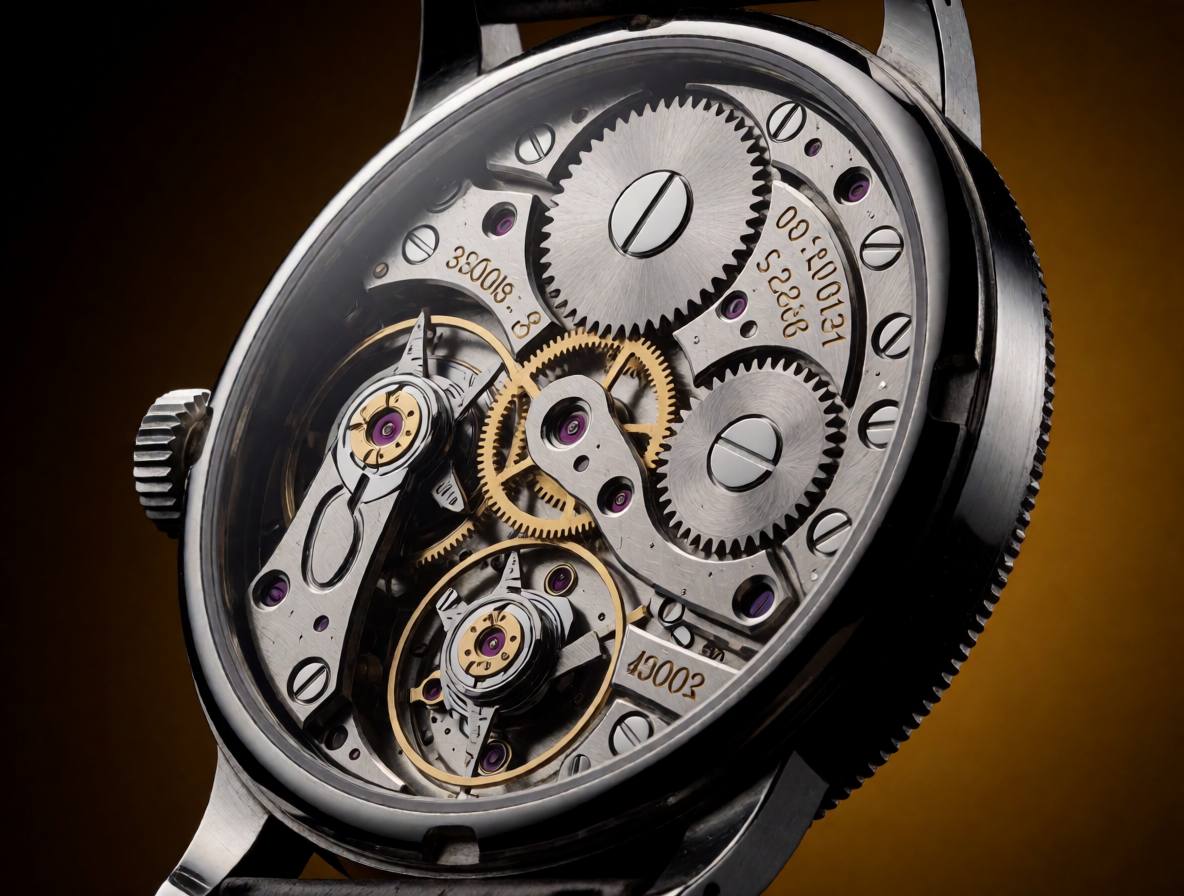
Prompt: "A professional macro photograph of an antique mechanical wristwatch with its back removed — hundreds of machined gears, ruby bearings, springs, engraved serial numbers, polished screws, brushed steel, oil sheen, dramatic studio lighting. 3:1 magnification, hyper-realistic 8K product photography."
Content match — 85/100: gears, ruby bearings, springs, engraved serials, polished screws, and brushed-steel components all present; dust particles and micro-scratches are subtler than asked.
Visual quality — 90/100: exceptional sharpness, accurate gear geometry and proportions, dramatic studio lighting with realistic metallic reflections.
Verdict: Strong macro result — the mechanical detail and lighting hold up under scrutiny.
Summary of all four tests
| # | Prompt subject | Content match | Visual quality | Overall |
|---|---|---|---|---|
| 1 | Paris Café Portrait — golden hour | 85/100 | 92/100 | ✅ PASS |
| 2 | Airline Boarding Pass — exact text | 95/100 | 92/100 | ✅ PASS |
| 3 | Cinematic Triptych — same woman ×3 | 85/100 | 60/100 | ❌ FAIL |
| 4 | Antique Watch — 3:1 macro, 8K | 85/100 | 90/100 | ✅ PASS |
Three passes and one failure point to a clear pattern. Krea 2 Medium is excellent at single-subject photorealism — the Paris café portrait and the antique-watch macro both scored 90+ on visual quality — and, notably, at accurate in-image text, rendering every field of the boarding pass with perfect spelling. Its one real weakness is multi-panel character consistency: holding the same believable person across several shots, where its realism slips into a waxy, CGI look with subtle facial drift.
Bottom line: Krea 2 Medium is not weak at photorealism — the opposite. It's strong at producing a single photorealistic image, but unreliable at repeating the same person photorealistically across many.
Krea AI image generation —
the prompt becomes the image as you type.
Krea AI occupies a unique position in the AI image generation landscape. Where Midjourney, DALL-E, and Stable Diffusion make you wait — type a prompt, wait 10–30 seconds, see the result, iterate — this one shows you the image as you type.
That single difference changes everything about the creative workflow. You are not guessing what a prompt will produce. You are watching it evolve in real time, adjusting words and seeing the image respond instantly. The feedback loop collapses from seconds to milliseconds.
It is not just an image generator. The full creative suite covers real-time image generation, video generation, AI upscaling and enhancement, image-to-image generation, image-to-video animation, LoRA finetuning, 3D generation, and a set of specialised mini apps — all browser-based, no installation required. The Krea 2 model powers the latest generation workflows with improved quality and prompt adherence.
The honest framing: it does one thing better than anything else in this category — it compresses the time between idea and image to near zero, at photorealistic quality. Everything else in the product exists in service of that goal.
It does not make you wait. It makes you iterate. And iteration is where great images actually come from.
Type a word. See the image.
Add another word. Watch it change.
The first time you use it, the experience is genuinely surprising. There is no render button. No generate queue. You start typing and the image appears, evolving with every character you add.
The experience feels like painting with language. You are not iterating blindly — you see what each word does to the image. "A cat" — you see a cat. "A fluffy orange cat sitting on a windowsill at golden hour" — the scene completes itself. Every word matters and you see it happening in real time.
- Start typing a prompt — the image appears instantly, before you finish the sentence
- Each word you add or change updates the image without any delay
- Refine, expand, and watch the image evolve as your description develops
- Quality is photorealistic from the first generation — no warm-up needed
- Upload an existing image and use it as a reference for image-to-image generation
- Export as PNG or JPG at up to 4K resolution on paid plans
It rewards curiosity. The low friction means you experiment more. More experiments mean better results.
Not just speed.
The feedback loop changes how you think about prompting.
Most reviews call it "fast." That is accurate but too narrow. Speed is the mechanism — real-time rendering, or realtime image generation, that redraws the canvas as you type. The real superpower is what that speed makes possible: a fundamentally different creative process.
In other tools, you write a prompt, generate, wait, evaluate, adjust, generate again, wait again. The cycle takes minutes per iteration. Here, that friction is gone entirely. You explore. You try "cinematic lighting" — see what happens. Add "golden hour" — watch the warmth appear. Remove a word — see the image shift. You stop trying to get the prompt right and start discovering what works.
Image-to-image generation extends this further. Upload a reference image — product render, concept art, photograph — and the platform uses it to guide the output. Image-to-video takes it a step further: animate any still image into a short video clip without leaving the platform.
- Explore 20 prompt variations in the time other tools take for one generation
- See exactly what each word contributes — "soft studio lighting" vs "cinematic lighting" vs "golden hour"
- Use image-to-image to anchor generation to a visual reference
- Edit existing images in real time — generative editing with the same live feedback
- Animate still images to video without switching platforms
- Build prompt intuition faster because consequence is immediate, not delayed
Krea AI did not invent real-time generation. It made it photorealistic. And that combination is something very few tools in this category can claim.
The moments that make
Krea AI worth knowing
The defining feature. No render button. No waiting queue. The image updates with every character you type. The feedback loop is so fast that experimentation becomes the workflow — and better results are the natural outcome of more iterations.
It produces results that rival Midjourney and DALL-E 3 for photorealism — often indistinguishable from real photographs. Portraits, landscapes, and product shots look genuinely convincing. The Krea 2 model delivers improved quality and prompt adherence over earlier versions.
Upload any still image as a reference for image-to-image generation — concept art, product renders, photographs. Image-to-video animation turns static images into short cinematic clips directly within the platform, no separate tool needed.
Beyond images, this capability creates short video clips from text prompts or still images. Motion transfer allows applying movement styles from one video to another. Part of the broader creative suite.
The built-in upscaler enhances and restores images with strong quality preservation. Upscale generated outputs to 4K or upload existing photos for quality improvement — a complete image production workflow without switching platforms.
Train custom LoRA models on your own image and video datasets for consistent brand identity, character styles, or product aesthetics. Trained LoRAs can be shared with the community — a significant advantage for teams and power users.
Krea AI videos —
from the official channel
Two videos from Krea's own YouTube channel, each with a short summary so you can scan what it covers before pressing play — the Krea 2 foundation-model announcement and a hands-on basics tutorial.
The official announcement of Krea 2 (K2), the company's first foundation model built from scratch and designed for aesthetics, style, and creative control — moving beyond the generic "AI look" into grainy film, cinematic stills, and digital painting.
A tutorial on Krea 2's exploratory prompting style: you don't need a perfect prompt. Start vague and iterate fast — a simple prompt yields a diverse range of styles, letting you discover directions you can then refine.
Mini apps and tools —
the full creative suite
The platform extends well beyond image generation, with a set of specialised mini apps covering editing, enhancement, and video workflows — all accessible from the same browser-based interface.
Automatically remove image backgrounds with AI — clean results suitable for product photography, compositing, and marketing assets.
AI-powered generative editing — modify, extend, or replace regions of an existing image using natural-language instructions. Real-time editing keeps the same instant feedback loop as generation: edits update live on the canvas as you make them, so you refine an image the same way you create one.
Smooth video clips by generating intermediate frames — increase frame rate and create fluid motion from lower frame rate source footage.
Apply an artistic style to a video clip — transform footage into a different visual aesthetic while preserving the underlying motion and composition.
Upscale video resolution with AI — improve the quality of existing footage for higher resolution distribution without re-shooting.
Apply the motion pattern from one video to another — transfer movement styles across different subjects and scenes for creative video production.
Animate a still image to match an audio track, creating realistic lip-synced videos from a single photo — useful for avatars, explainers, and talking-head content.
Build custom pipelines with Nodes and Apps — automate repetitive tasks, chain generation and editing steps, and share Node Apps with your team. Available on Pro and Business plans.
- The suite includes a built-in asset manager for organising generated images, videos, and trained LoRAs
- Manage your full generation history, organise into collections, and access assets across sessions
- Particularly useful for teams and agencies managing high-volume creative production
Krea AI video generation —
create and animate video in real time
Krea AI is not only an image tool — video generation is a core part of the suite. You can generate short clips two ways: text-to-video, describing a scene and getting a clip back, and image-to-video (animate image), turning any still — concept art, a product render, or an AI-generated image — into motion. Because Krea is a multi-model platform, the same canvas gives you access to leading video models rather than a single engine.
The real-time philosophy carries over: you iterate on prompts and references quickly instead of waiting on long render queues. Around generation sit the video mini apps — video upscaling to lift footage to higher resolution, frame interpolation to smooth motion, video style transfer to restyle a clip, motion transfer to move one subject's movement onto another, and lip sync to match a still to an audio track. Together they make Krea a place to create, animate, and finish video without switching platforms — realtime image generation and video in one creative suite.
- Text-to-video — generate a clip from a prompt
- Image-to-video — animate a static image into a short cinematic clip
- Video upscaling, frame interpolation, and video style transfer
- Motion transfer and lip sync for creative video production
- Access to multiple leading video models from one interface
Available models on Krea AI —
64+ image and video models in one place
Krea is model-agnostic. Alongside its own Krea 2 foundation model, it gives you access to 64+ image and video models in a single interface, and new models are typically added on release day. That means you can run one prompt across several models and pick the best result — without a separate subscription for each.
- Krea 2 — Krea's own aesthetic-first foundation model, with 1000+ built-in styles for fine creative control
- Image models — Flux, Ideogram, Google Gemini image (Nano Banana line), Seedream (incl. the latest Seedream Pro), GPT Image 2
- Video models — Google Veo 3.1, Runway, Luma, Seedance, Kling, Hailuo
- Always current — new models are added regularly as they ship, so the line-up stays up to date
With over 1000 styles on Krea 2 — from risograph to cinematic to watercolour — plus the wider model roster, you get both breadth of models and granular style control from one creative suite. You can also train and fine-tune your own models on top: LoRA fine-tuning turns any of these generative models into a custom, on-brand generator.
Krea AI limitations —
a few things worth understanding upfront
Historically a weak spot for models like Midjourney and DALL-E. Krea 2 is noticeably better — in our tests it rendered a full boarding pass with perfect spelling — but it still isn't guaranteed for dense or complex layouts. For anything where crisp readable text is mission-critical (logos, long signage), Ideogram 2.0 remains the safest purpose-built choice.
It excels at photorealism. Stylised outputs — oil painting, illustration, watercolour, abstract — are competent but not the strongest in the category. Midjourney still leads for artistic and painterly styles with a broader aesthetic range.
There is an iOS app — Krea: AI Images and Videos — available on the Apple App Store. Android is not yet available. The desktop browser experience remains the primary workflow for real-time generation, with the mobile app giving access to core features on the go.
The free tier limits daily generation count, caps resolution, adds a watermark to all exports, and restricts use to personal projects only. Video generation, 4K upscaling, LoRA finetuning, and API access all require a paid plan. Check krea.ai for current pricing.
No negative prompting. Limited inpainting depth. The platform is intentionally focused on generation workflows. For creators who need frame-level control over specific image regions, dedicated editors like Photoshop or OpenArt AI go significantly deeper.
Midjourney's Discord community is massive — prompt sharing, style exploration, and community inspiration resources are abundant. This community is smaller and less active. If learning from a large creative community is part of how you work, Midjourney still wins on that dimension.
Upscaling, video features,
and what it looks like under the hood
| Feature | Specs & Context |
|---|---|
| Generation model | Krea 2 — updated model with improved photorealism, stronger prompt adherence, and better frame-to-frame consistency for video workflows. |
| Generation speed | Real-time — results appear as you type with sub-second latency. No render button. No generation queue. Fastest iteration cycle in this category. |
| Output quality | Photorealistic — often indistinguishable from real photographs. Strongest on portraits, landscapes, and product imagery. Rivals Midjourney and DALL-E 3 for realism. |
| Resolution | Free tier: standard resolution. Paid plan: up to 4K upscaling with strong quality preservation. |
| Image-to-image | Upload any still image as a generation reference. Guides output toward the visual structure of the reference while applying prompt-driven changes. |
| Image-to-video | Animate any still image into a short video clip — concept art, product renders, portraits, or AI-generated images all become potential video assets. |
| Video generation | Text-to-video and image-to-video generation. Includes motion transfer — apply movement styles from one video to another subject or scene. |
| Upscaler | AI upscaling and image enhancement built into the platform. Upscale generated images or upload existing photos for restoration and quality improvement up to 4K. |
| Video upscaling | Upscale video resolution with AI. Improve the quality of existing footage for higher resolution distribution. |
| LoRA finetuning | Custom LoRA training for images and video. Train on your own datasets for consistent brand identity, character styles, or product aesthetics. LoRAs can be shared with the community. |
| 3D generation | Text-to-3D and image-to-3D generation. Useful for game assets, product mockups, and concept visualization. Accessible within the broader creative suite. |
| Generative editing | AI image editor for modifying, extending, or replacing regions of existing images using natural language. Background remover, frame interpolation, and video style transfer also included. |
| Asset manager | Built-in organisation tool for generated images, videos, and trained LoRAs. Manage generation history, create collections, and access assets across sessions. |
| Platform | Browser-based. iOS app available on the Apple App Store (Krea: AI Images and Videos). No Android app currently available. |
| API access | API available on Pro plan — integrate real-time image and video generation into existing creative pipelines and automation workflows. |
| Text rendering | Limited — not reliable for accurate text inside images. Use Ideogram 2.0 for logos, signs, and any image requiring crisp readable text. |
| Model roster | 64+ image and video models in one place — Krea 2 plus Flux, Ideogram, Gemini, Seedream, GPT Image 2, Veo 3.1, Runway, Luma, Kling, Hailuo, and more. New models added on release day. |
| Built-in styles | Over 1000 built-in styles on Krea 2 — from risograph to cinematic to watercolour — for precise creative control over the look of a generation. |
| New model releases | Actively updated — the latest models (including the newest Seedream Pro releases) are added regularly, so the platform stays current. |
| Lip sync | Animate a still image to match an audio track for realistic lip-synced videos — useful for avatars and talking-head content. |
| Workflow automation | Nodes and Apps let you build custom pipelines, automate repetitive tasks, and share Node Apps with your team (Pro and Business plans). |
| Commercial rights | Pro plan includes commercial usage rights. Free tier output carries watermark and personal use only. |
Krea 2 is open-source —
available on GitHub and Hugging Face
Here's a differentiator few major AI image generators can claim: Krea 2 is open-source, released with open weights. This makes Krea one of the only mainstream image platforms built on a fully open foundation model — a real trust and authority signal for developers, studios, and enterprises evaluating what they're building on.
- Krea 2 RAW — the base pretrained checkpoint (no distillation), diverse and highly malleable, intended for fine-tuning and LoRA training
- Krea 2 Turbo — an 8-step distilled checkpoint built for fast, high-quality text-to-image
- Hugging Face — open weights published under the Krea namespace (Krea-2-Raw and Krea-2-Turbo)
- GitHub — official inference code at krea-ai/krea-2, with a technical report
On quality, Krea describes Krea 2 as the most aesthetic open-source image model available, and it has ranked as a top text-to-image model from an independent lab on public benchmarks. For anyone searching "Krea open source" or "Krea GitHub," the short answer is yes — the foundation model is genuinely open.
Krea AI pricing —
free to start, plans for pros, teams, and enterprise
Krea is priced by plan and compute. The free tier gives you a daily allowance of compute units with no credit card; paid plans add monthly credits, commercial licensing, faster generation, and the full model roster. Annual billing saves around 40% across paid plans.
| Plan | Price (monthly) | Best for |
|---|---|---|
| Free | $0 | Getting started — a daily allowance of compute units, no credit card required |
| Basic | $9 | Individuals who want a commercial license, monthly credits, and full access to image and 3D models |
| Pro | $35 | Power users running multimodal workflows across image, video, and 3D |
| Max | $70 | Heavy daily users and small studios |
| Business | $200 | Creative teams and agencies |
| Enterprise | Custom | Custom compute packages, security, and controls — priced on request |
*Prices in US dollars and accurate at time of publishing; annual billing saves roughly 40%. Check krea.ai for current plans, credits, and discounts.
Cost per image and value vs Midjourney. Because Krea is compute- and credit-based, the effective cost per image is low: the free tier gives a daily allowance, and the Basic plan bundles a commercial license with monthly credits. The bigger value point is scope — a single Krea plan includes image and video generation, upscaling, and LoRA finetuning, whereas a comparable Midjourney tier covers image generation only. On a like-for-like basis, Krea's cost per image often buys more than the matching Midjourney plan, and annual discounts widen the gap further.
- Team collaboration — Business plans add seats, shared workspaces, and shared Node Apps for creative teams and agencies
- Custom controls — enterprise plans offer custom roles and permissions, fine-grained model access, and priority support
- Custom compute — dedicated compute packages for high-volume production, plus security and governance controls for business use
- Adopted by studios and firms — creative teams, agencies, and enterprises (including design and architecture firms such as Gensler) use Krea in production
Industry use cases for Krea AI —
architecture, design, ecommerce, gaming
The real-time suite maps onto a few industries especially well, where fast iteration and photorealism translate directly into saved time.
Generate photo-like architecture visualizations and turn sketches or massing models into rendered concepts in real time — useful for early design exploration and client presentations.
Restyle a room, test materials and palettes, and explore layouts fast with image-to-image, using a photo of the space as the reference.
Create product shots, lifestyle scenes, and marketing visuals, then remove backgrounds and upscale to 4K — a full product-image workflow in one place.
Prototype characters, environments, and assets quickly, train a LoRA for a consistent art style, and generate 3D objects with AI for concept and pre-production work.
A fast social media workflow from idea to post: ideate visuals in real time, generate platform-ready images and short image-to-video clips, add text with a dedicated tool (Krea's text rendering is limited), then upscale and export in the right aspect ratio for each platform.
Krea AI vs Midjourney —
which one fits your workflow
These are the two strongest tools for photorealistic AI image generation in 2026. They solve the same core problem differently — and which one is right for you depends entirely on how you work.
| Feature | Krea AI | Midjourney |
|---|---|---|
| Generation speed | Real-time as you type | 10–30 seconds per generation |
| Photorealism | Excellent | Excellent |
| Artistic styles | Good | Market-leading |
| Text in images | Limited | Limited |
| Image-to-image | ✓ Supported | ✓ Supported |
| Image-to-video | ✓ Included | ✗ Not available |
| Video generation | ✓ Included | ✗ Not available |
| AI upscaler | ✓ Built-in | Limited |
| LoRA finetuning | ✓ Image + Video | ✗ Not available |
| 3D generation | ✓ Included | ✗ Not available |
| Mini apps | ✓ 6 tools | ✗ Not available |
| API access | ✓ Available | Limited |
| Mobile app | ✓ iOS | ✓ iOS + Android |
| Community | Growing | Massive Discord |
| Best for | Speed, suite breadth, iteration | Artistic range, community |
Choose Krea AI when iteration speed and creative suite breadth are your priorities. Choose Midjourney when artistic range and community learning matter most. Many creators use both.
How to use Krea AI —
your first session step by step
Getting started takes minutes. No installation, no configuration — open the browser and start generating. Here is what to do in your first session.
Sign up with Google or email. No credit card required for the free tier. You are generating within two minutes of landing on the page.
Select Image Generation from the dashboard. The canvas loads with a prompt field — no buttons to press, no settings to configure.
Type a subject, then add environment, lighting, and style one word at a time. Watch the image respond to every word. This is the core workflow — not generate and wait, but type and see.
Upload an existing image as a visual reference. The platform will use it to anchor the generation while your prompt drives the output. This is the fastest way to see the image-to-image capability in action.
Click export for PNG or JPG. On Pro, run through the upscaler before exporting for 4K output. The whole workflow from first word to finished file takes minutes, not hours.
What to expect with Krea AI
session by session
The first session is genuinely different from every other AI image tool. You type. The image appears. You type more. The image changes. The feedback loop is so fast that you find yourself experimenting more than you planned. Most users generate something they are proud of in the first ten minutes.
After a few sessions, you internalise how it responds to different language. You learn which adjectives move the image meaningfully and which add nothing. The real-time feedback means you learn faster than with any other tool because you see the consequence of every word immediately.
It becomes your first choice for any photorealistic image generation task. When you occasionally go back to Midjourney or DALL-E, the wait feels genuinely frustrating. You start exploring the broader suite — video generation, upscaling, LoRA finetuning — and it becomes less like a tool and more like creative infrastructure.
Three creators who will
get real value from Krea AI
You enjoy the craft of prompt engineering. You experiment, refine, and explore until you get exactly what you want. Waiting 30 seconds between iterations kills your flow. Its real-time feedback is built for exactly your workflow — faster iteration means better results every time.
You need images that look like real photographs for client work, social content, or product visuals. Its photorealistic output rivals the best in the category — and the full suite of image editing, upscaling, background removal, and video tools means you rarely need to leave the platform. A complete use case for designers.
You need to explore 50 visual directions in an hour. Its real-time feedback and photorealistic output give you visual direction faster than any other tool in this category — with enough output quality to present concepts to clients without a separate refinement step.
Who should
look elsewhere
Being honest about fit is what makes a recommendation worth trusting. Here is when another tool will serve you better.
Krea AI reviews —
early on G2, but positive
Krea AI's G2 profile is still small — 5.0 out of 5, but across just 2 reviews in the AI Image Generators category — so treat it as an early signal rather than a large-sample verdict. What's there is positive, and it lines up with the rest of this review.
- Realistic images fast from short prompts
- Easy access to many AI models in one place
- Simple, easy-to-use interface — quick to get started
- Great for brainstorming, rough drafts, and concept exploration
- Generation can be slow at times, especially in batches
- Sometimes needs detailed prompts to match the intended result
- Small review sample so far — limited long-term signal
The honest read: reviewers value the speed, the model access, and the ease of use, and the criticisms are about generation speed under load and prompt precision — not output quality. Source: Krea reviews on G2 — 5.0/5 across 2 reviews at the time of writing.
Krea AI FAQ —
questions people actually ask
About this review
This review was researched and written by the TechScribe editorial team. Our assessment is based on Krea AI's product, documentation, open-source releases (Krea 2 on GitHub and Hugging Face), and live pricing, combined with verified user feedback from G2 (5.0 out of 5 across 2 reviews at the time of writing). Where Krea has real limits — text rendering, artistic-style range, an iOS-only mobile app, and free-tier caps — we say so plainly, and we update this page as Krea's models and pricing change.
TechScribe publishes hands-on, no-hype reviews of AI image, video, and design tools. This page contains affiliate links: if you sign up through them, we may earn a commission at no extra cost to you — which never affects our rating or what we recommend.
The verdict
Krea AI made a deliberate choice — prioritise the feedback loop above everything else.
Speed is the feature. Real-time iteration is the workflow. Photorealism at speed is the result. Everything in the product reflects that choice — the instant generation, the word-by-word refinement, the image-to-image workflow, the video generation, the upscaler, the LoRA finetuning, the 3D generation, the mini apps, the API. All of it serves the same goal: compressing the distance between an idea and a finished image to near zero.
Midjourney has the artistic range. Ideogram has the text rendering. OpenArt AI has the structural control. This one has the speed — and increasingly, the suite.
It is trying to answer one question better than any tool in this category — how fast can you get from an idea to an image you are proud of?
The answer is: faster than you have ever experienced before.
Krea AI does not solve every image generation problem. It solves the one that matters most for creators who iterate: the time between idea and image. And with a creative suite that now covers video, 3D, upscaling, and LoRA finetuning, it does considerably more than that.
Try Krea AI for yourself
Open the free tier, start typing, and watch the image appear. That single moment tells you everything you need to know about whether this workflow fits how you create. No render button. No waiting. Just iteration.
Affiliate link — we may earn a commission at no extra cost to you. Our review is always independent.