Best AI Models for Text to Image Generation. 14 Models. One Prompt. Two Verdicts.
Which AI model best converts a complex text prompt into a precise, photorealistic image? We tested 14 models on OpenART AI with the same structured prompt — 11 hard constraints, exact text requirements, precise object counts, and specific spatial relationships. Every output scored using DeepEval across 5 dimensions. Two verdicts: best overall accuracy and best visual quality.
The core tension: The model that produces the best visual quality (Qwen Image 2.0) is not the model that follows your instructions most accurately (GPT Image 2.0). Qwen's critical failure was spatial — the man was placed on the wrong side of the frame. A beautiful image that ignores your instructions is not a successful text to image generation. Choose based on what your use case demands.
📋 THE PROMPT
The exact prompt used to test every model — word for word.
This prompt was specifically designed to be hard. Not to trick the models — but to separate genuinely capable text to image generation from superficially impressive outputs. Every model received this exact prompt verbatim. No modifications. No shortcuts.
📋 Test Prompt — Identical across all 14 models
Create a photorealistic office scene inside a modern AI research company.
Follow ALL instructions exactly.

PEOPLE
There must be exactly 3 people in the image:
1. A woman wearing a green blazer working on a laptop.
2. A man wearing a red hoodie writing on a tablet.
3. A woman wearing a yellow shirt standing near a whiteboard.
Do not include any additional people.

SPATIAL RELATIONSHIPS
* The man in the red hoodie must be sitting to the LEFT of the woman using the laptop.
* The woman in the yellow shirt must be standing BEHIND both seated people.
* All three people must be clearly visible.

WHITEBOARD
The whiteboard must contain exactly this text:
AI Tool Evaluation Dashboard
The text should be clearly readable.

LAPTOP SCREEN
The laptop screen must display a dashboard with exactly these metrics:
Accuracy: 92%
Latency: 1.2s
Cost: $0.04
The text should be readable.

OBJECTS
Include exactly:
* 2 coffee mugs
* 1 indoor plant
* 1 wall clock showing 10:15
Do not include additional mugs, plants, or clocks.

ENVIRONMENT
* Modern technology office
* Natural daylight coming through windows
* Clean desk setup
* Professional workspace

STYLE
* Photorealistic DSLR-quality photography
* Natural colors
* Sharp focus
* Realistic skin textures
* Realistic lighting

NEGATIVE CONSTRAINTS
Do NOT include:
* Extra people
* Extra coffee mugs, plants, or clocks
* Watermarks or logos
* Floating objects
* Distorted hands
* Blurry text
* Cropped subjects
* Cartoon, illustration, or CGI style
Why this prompt? A complex text to image generation prompt is the hardest test for any AI image model. It combines exact text rendering on a whiteboard and laptop screen, precise object counts, spatial left/right positioning, and strict negative constraints — simultaneously. Any model that scores well here will handle real-world complex prompts reliably. The clock time (10:15) was intentionally the hardest single element — across all 14 models, only GPT Image 2.0 came close to getting it right.
How this differs from our photorealism test: This structured prompt tests instruction compliance — can the model do exactly what you ask? Our photorealistic image test uses a creative DSLR portrait prompt with no exact constraints — testing pure visual quality instead. The models that win here are not the same models that win there. That contrast is the most valuable insight across both studies.
📊 FULL SCOREBOARD
Best AI models for text to image generation — all 14 models ranked by overall accuracy.
Visual Quality = Stylistic + Perceptual averaged (out of 100). Overall = reported benchmark score across all 5 dimensions. Pass threshold = 70 per dimension.
#
Model
Alignment
Consistency
Stylistic
Perceptual
Integrity
Visual Q
Overall
Verdict
1
GPT Image 2.0
90 ✓
90 ✓
71 ✓
80 ✓
82 ✓
76
82
🎯 Accuracy
2
Seedream 5.0
90 ✓
80 ✓
69 ✗
70 ✓
82 ✓
70
79
Mostly
3
Auto ⚠️
89 ✓
90 ✓
62 ✗
70 ✓
80 ✓
66
78
Mostly
4
Nano Banana Pro
74 ✓
70 ✓
45 ✗
70 ✓
100 ✓
58
70
Partial
4
Qwen Image 2.0
69 ✗
60 ✗
86 ✓
70 ✓
56 ✗
78 🎨
70
🎨 Visual
6
GPT Image 1.5
97 ✓
80 ✓
15 ✗
70 ✓
90 ✓
43
69
Partial
7
Grok Imagine
84 ✓
60 ✗
64 ✗
70 ✓
66 ✗
67
67
Partial
8
Midjourney v8.1
78 ✓
60 ✗
41 ✗
70 ✓
82 ✓
56
66
Partial
9
Imagen 4.0
68 ✗
60 ✗
60 ✗
70 ✓
68 ✗
65
65
Partial
10
Flux 2.0
77 ✓
70 ✓
46 ✗
70 ✓
50 ✗
58
63
Partial
11
Juggernaut Flux
22 ✗
60 ✗
63 ✗
70 ✓
88 ✓
67
56
Partial
12
Flux Context Max
40 ✗
40 ✗
47 ✗
70 ✓
88 ✓
59
54
Non-Compliant
13
OpenArt Photo
49 ✗
40 ✗
42 ✗
70 ✓
72 ✓
56
52
Non-Compliant
14
Kling 3.0 Omni
52 ✗
60 ✗
30 ✗
70 ✓
40 ✗
50
48
Non-Compliant
⚠️ Auto model note: OpenART AI's Auto mode does not disclose which model it selected. The 78/100 score cannot be attributed to a specific model and results are not reproducible. Always select a specific model for attributable, reliable text to image generation.
GPT Image 1.5 paradox: Highest alignment of any model tested — 97/100. But stylistic collapsed to 15/100, dragging overall to 69. One dimension failure can destroy an otherwise excellent result. Always evaluate all 5 dimensions, not just the headline number.
Kling 3.0 Omni last here — first in photorealism: Kling scored 48/100 on this structured prompt test but 93/100 on our photorealism test. The same model. Completely different results. This is the clearest proof that model selection must match prompt type.
🔍 MODEL BY MODEL BREAKDOWN
Best AI models for text to image generation — what each model produced and why it scored what it scored.
Every card shows the actual generated image, the dimension scores, and a detailed analysis of what the model got right — and what it got wrong — when converting a complex text prompt into a precise photorealistic image.
1
GPT Image 2.0 🎯 ACCURACY WINNER
82/100 — best AI model for text to image generation accuracy across all 21 models in both studies
82/100
🎨 Visual Q: 76/100
Alignment90✓ Pass
Consistency90✓ Pass
Stylistic71✓ Pass
Perceptual80✓ Pass
Integrity82✓ Pass
✓ What it got right
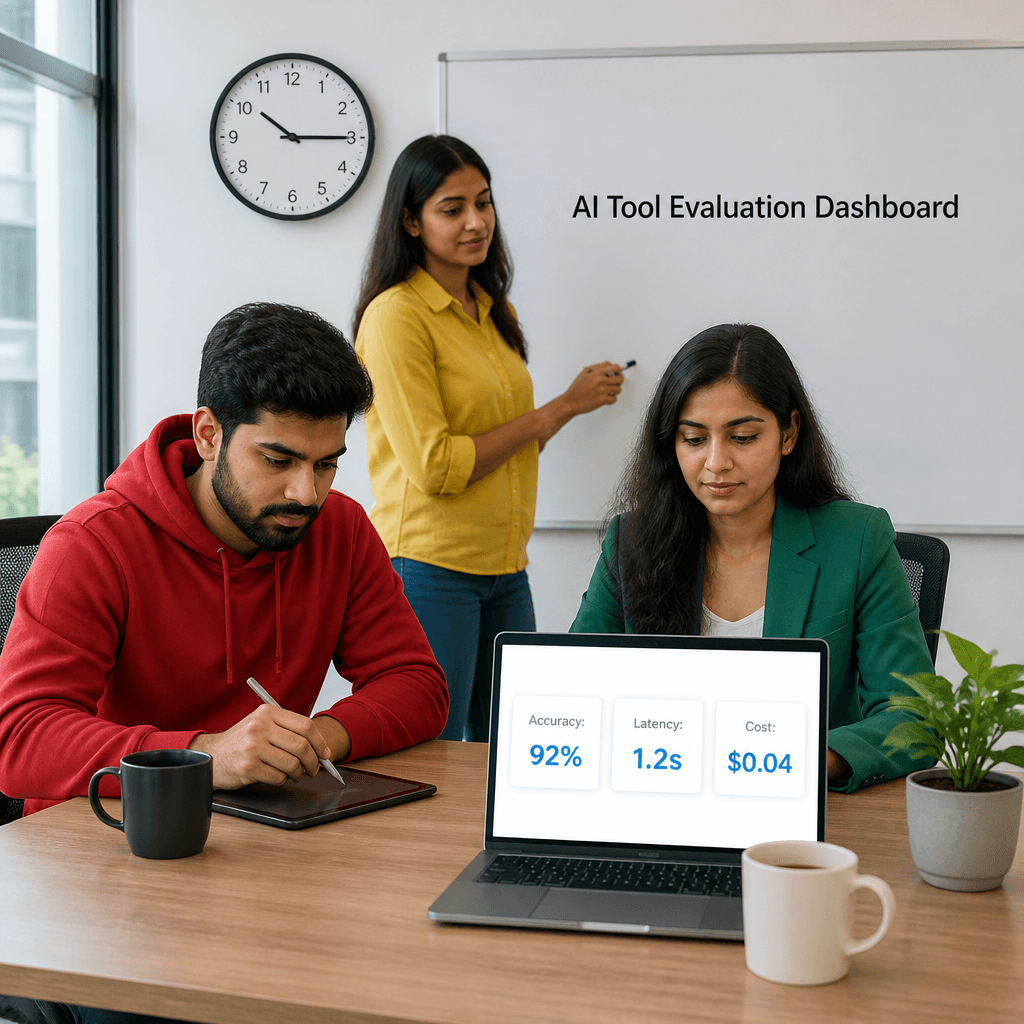
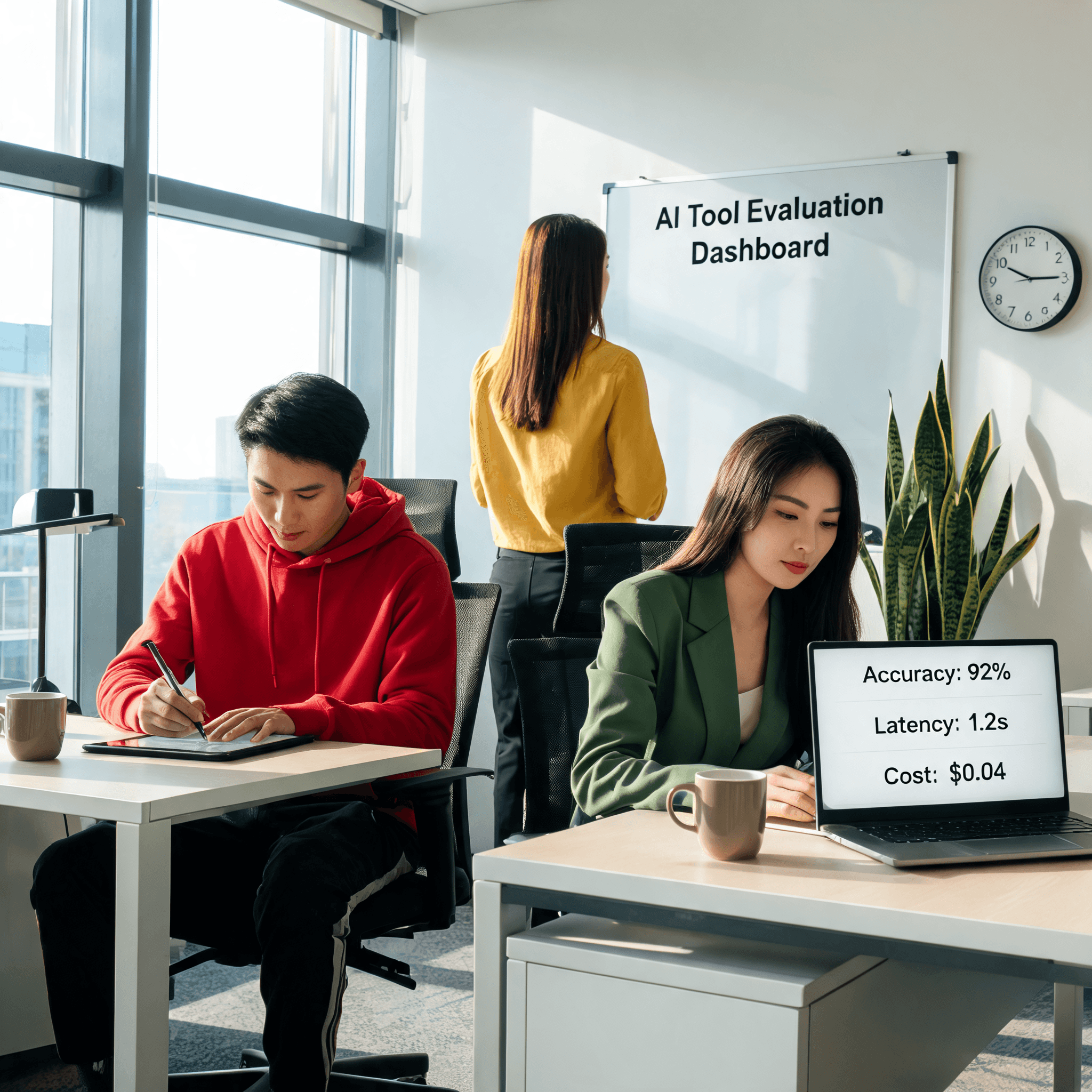
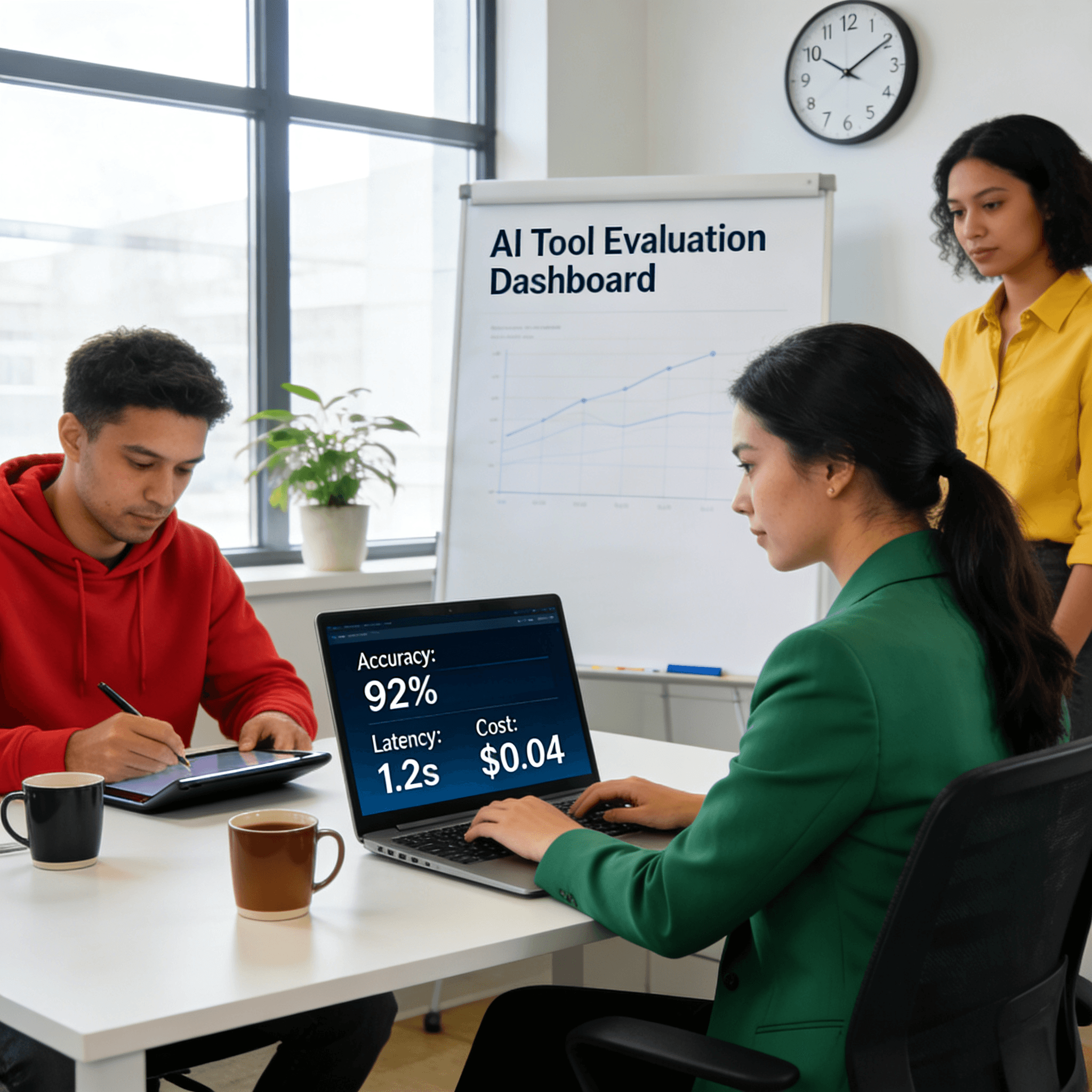
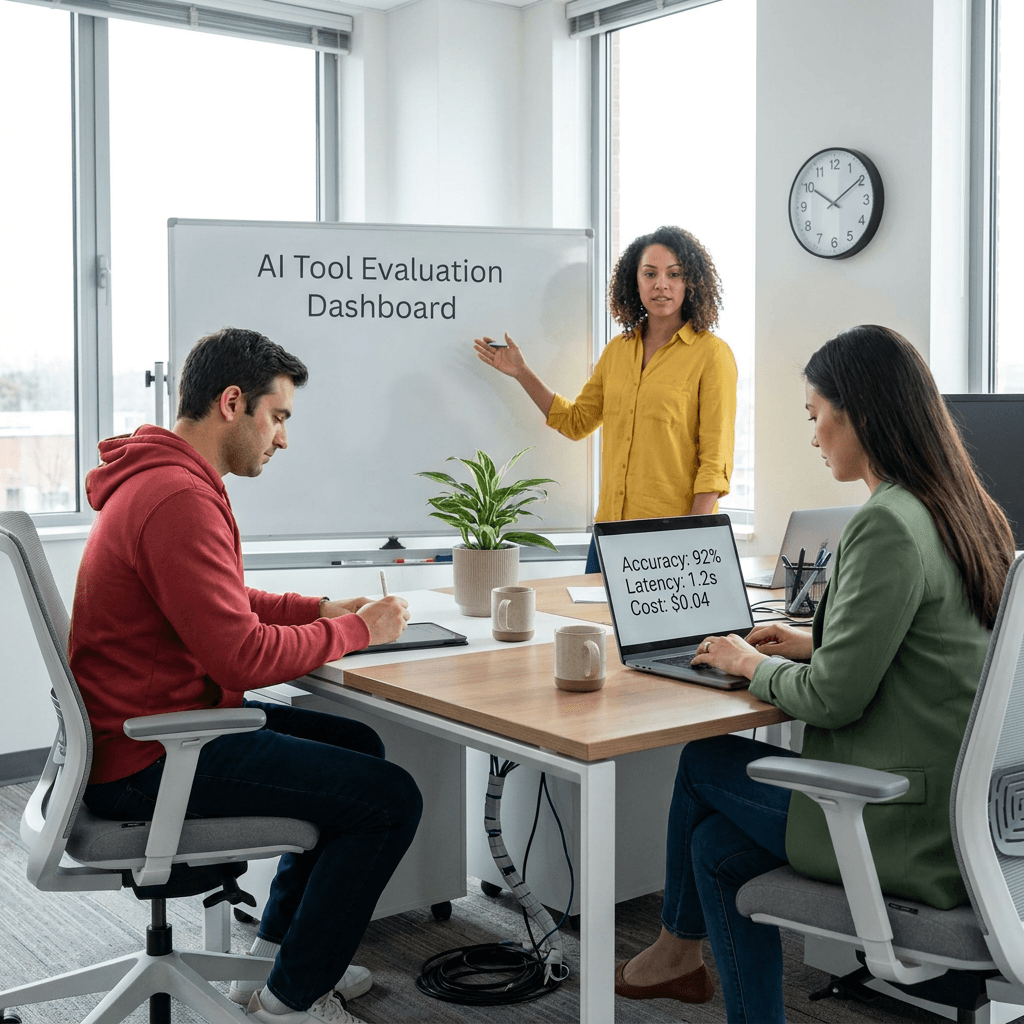
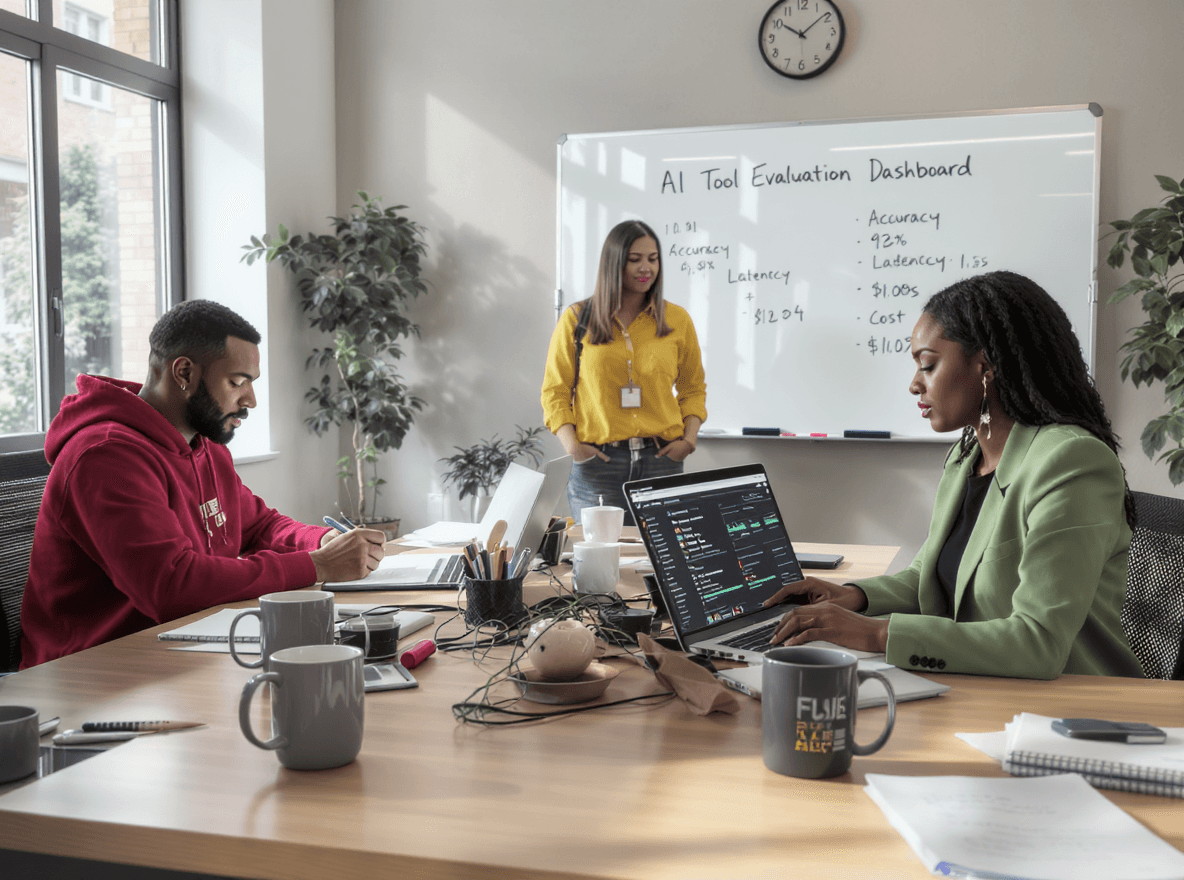
GPT Image 2.0 is the benchmark leader for best AI text to image generation accuracy — the only model to pass all 5 dimensions simultaneously. It produced exactly 3 people with correct clothing, correct spatial positioning with the man sitting to the left, whiteboard text "AI Tool Evaluation Dashboard" clearly readable, laptop metrics (Accuracy: 92%, Latency: 1.2s, Cost: $0.04) all correct, exactly 2 coffee mugs, 1 plant, and a clock showing approximately 10:15–10:18 — the closest any model came to the required time across both studies. The consistency score of 90 — tied highest — reflects how precisely it executed the structured prompt instructions.
✗ Where it failed
Stylistic evaluation flagged studio lighting supplement alongside natural daylight — a slight deviation from the natural daylight only requirement. These are small deductions on an otherwise excellent text to image generation result.
✓ Entities Detected
woman in green blazerman in red hoodiewoman in yellow shirtlaptoptabletwhiteboardcoffee mug ×2indoor plantwall clockdeskchairwindow
🚩 Issues Flagged
clock ~10:17 not 10:15studio lighting supplementartifact (minor)
2
Seedream 5.0
79/100 — Bytedance's strongest text to image generation model, 11pt improvement over original
79/100
🎨 Visual Q: 70/100
Alignment90✓ Pass
Consistency80✓ Pass
Stylistic69✗ Fail
Perceptual70✓ Pass
Integrity82✓ Pass
✓ What it got right
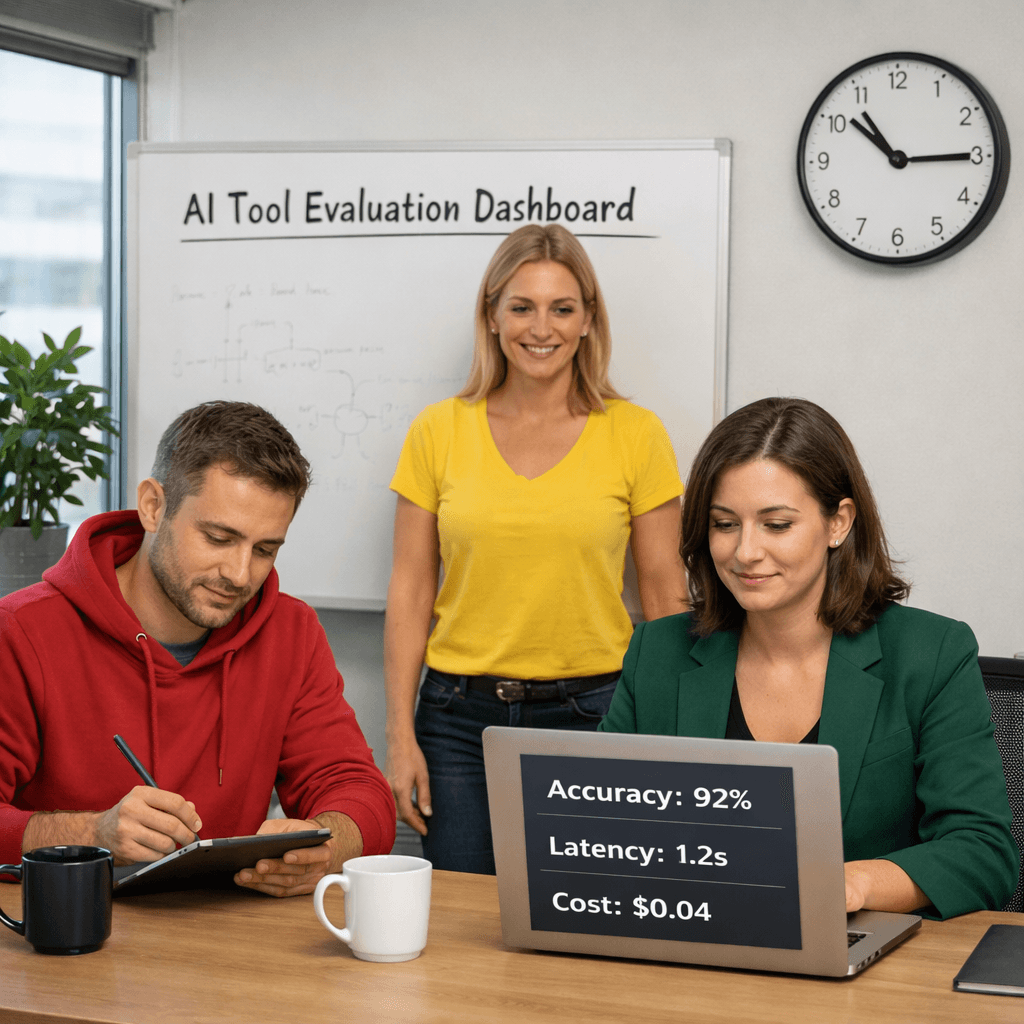
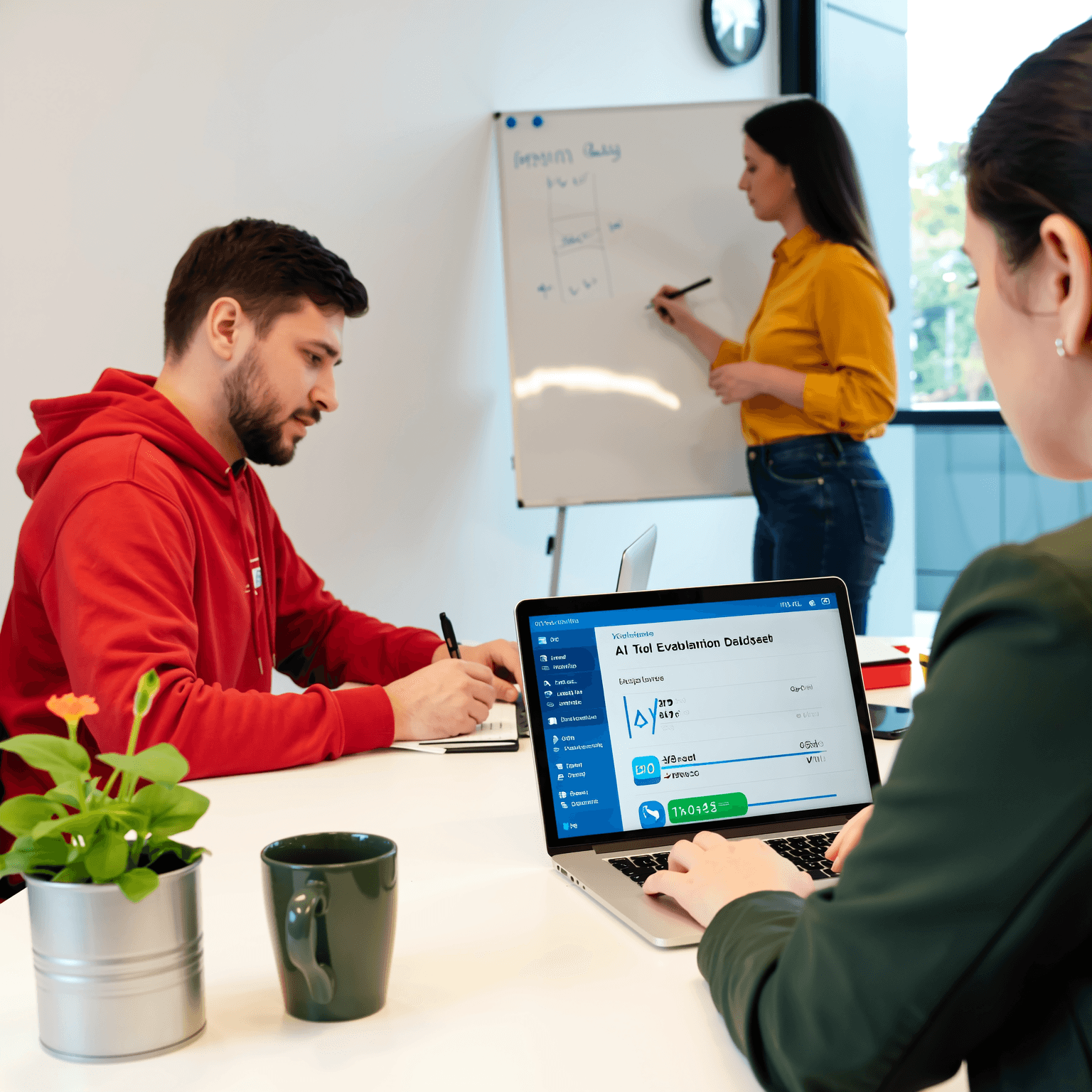
Seedream 5.0 is a significant upgrade over the original Seedream for text to image generation — jumping from 68/100 to 79/100, an 11-point improvement that reflects Bytedance's substantial model improvements. All 3 people with correct clothing and spatial positioning. Whiteboard text correct. Laptop dashboard metrics clearly displayed. Exactly 2 coffee mugs, 1 plant. Strong alignment score of 90 — matching GPT Image 2.0 on prompt understanding. DSLR-quality photorealism with natural window lighting. All forbidden elements confirmed absent.
✗ Where it failed
Man's activity on tablet vs paper was ambiguous in some evaluations. Stylistic score of 69 — one point below the pass threshold — reflects studio enhancement fill noted alongside natural daylight, slightly reducing style compliance.
🚩 Issues Flagged
clock ~10:10 not 10:15studio fill lightingartifact (minor)
3
OpenART Auto ⚠️ Model Unknown
78/100 — strong text to image generation result but model identity not disclosed
78/100
🎨 Visual Q: 66/100
Alignment89✓ Pass
Consistency90✓ Pass
Stylistic62✗ Fail
Perceptual70✓ Pass
Integrity80✓ Pass
⚠️
Model not disclosed. OpenART AI's Auto mode selects the best model for text to image generation without revealing which one. This 78/100 score cannot be attributed to a specific model and results cannot be reproduced reliably. For consistent, attributable text to image generation — always select a specific model manually.
✓ What it got right
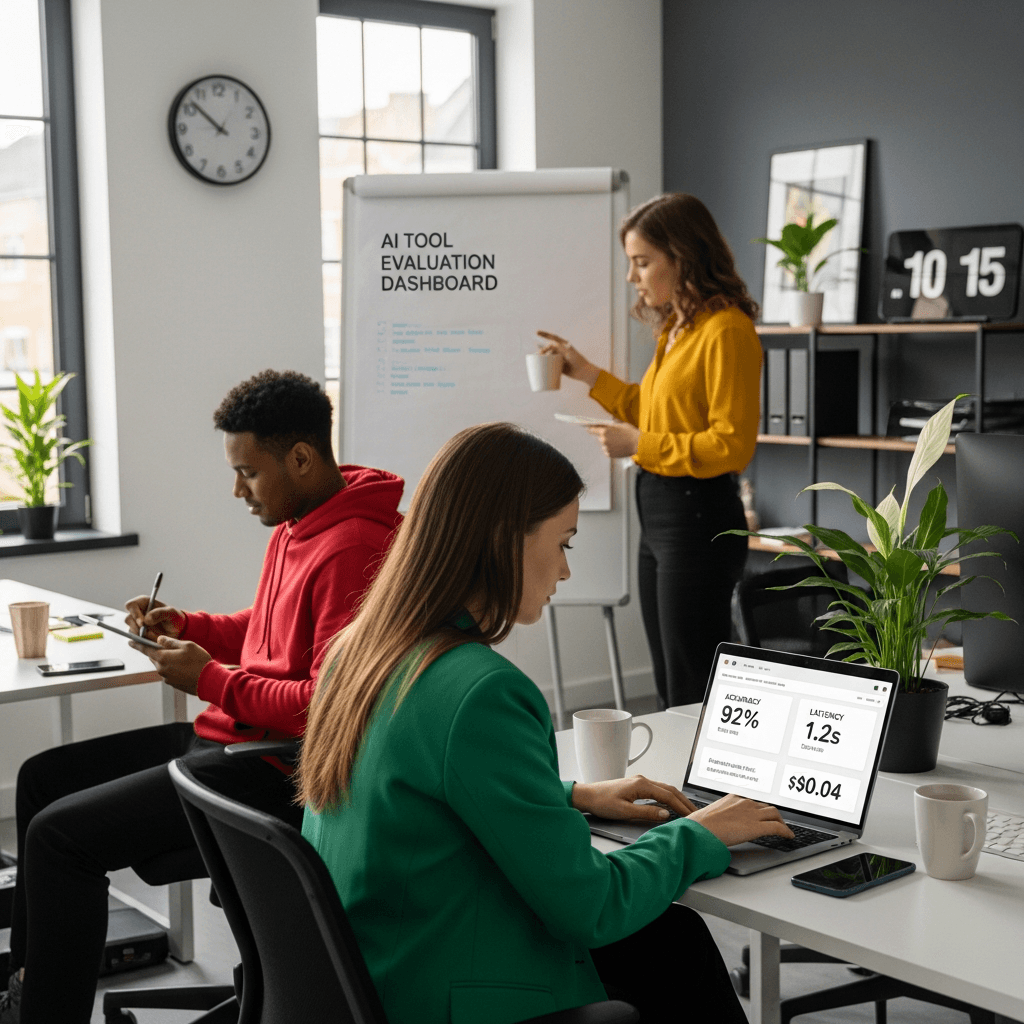
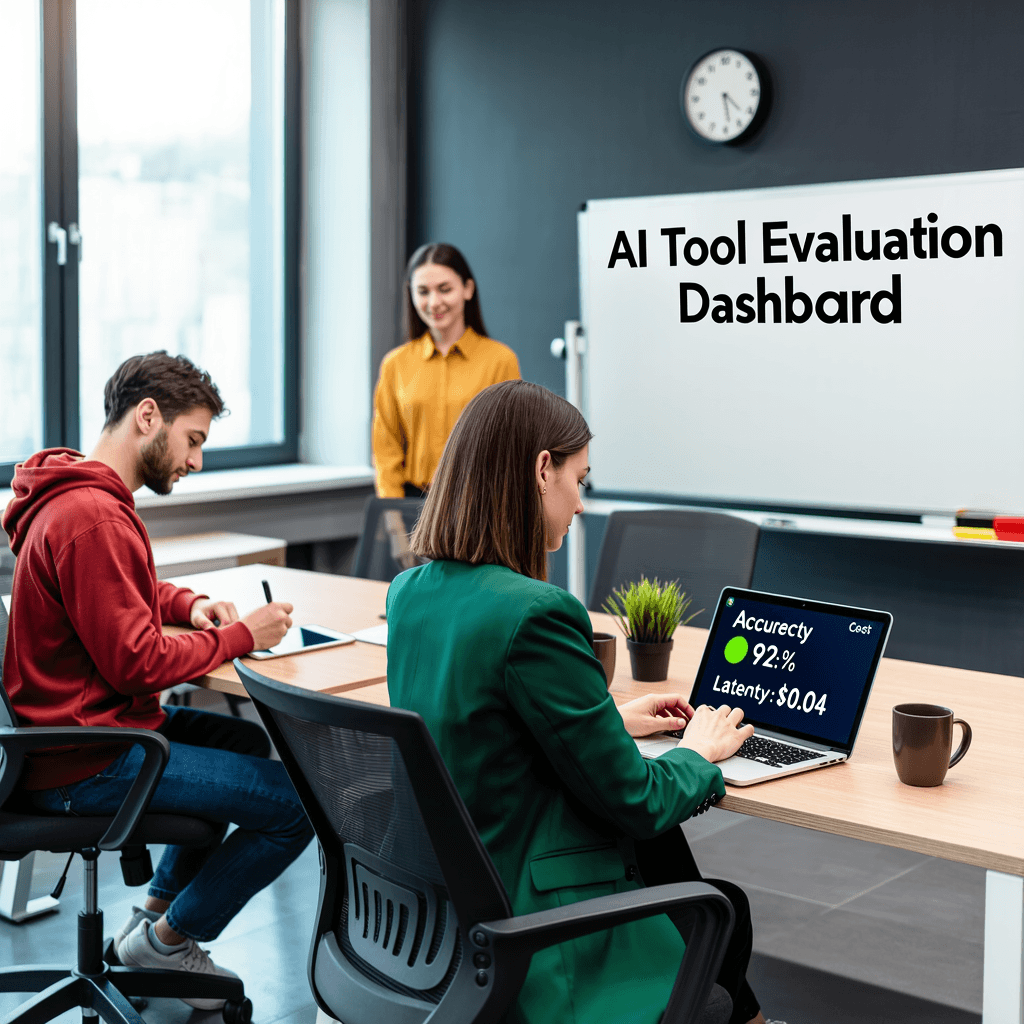
Strong text to image generation result — 3 people with correct clothing, correct spatial positioning, whiteboard text exact, laptop metrics (Accuracy: 92%, Latency: 1.2s, Cost: $0.04) correct, exactly 2 coffee mugs, 1 plant. Tied highest consistency score of 90 with GPT Image 2.0. Photorealistic quality with natural lighting throughout.
✗ Where it failed
Clock shows approximately 10:10 instead of 10:15. Extra coffee mugs flagged as forbidden element. Palette described as bold saturated primaries — slight deviation from natural colors requirement. Model identity unknown — results not reproducible. Stylistic score (62) below pass threshold.
🚩 Issues Flagged
model identity unknownclock ~10:10extra coffee mugssaturated palette
Perfect integrity score — 100/100, the only model in this text to image generation benchmark to achieve this. Every forbidden element confirmed absent. All 3 people present with correct spatial positioning. Whiteboard text correct. Laptop metrics correct. 2 coffee mugs. Man writing on tablet as required. Soft natural lighting through large windows. Strong overall visual quality of the scene.
✗ Where it failed
Woman's garment is a green cardigan/sweater — not a blazer as specified in the text to image generation prompt. Clock shows approximately 10:10 instead of 10:15. Stylistic score (45) well below pass threshold — the lowest of any passing model. Slightly elongated lower body proportions on one figure noted.
🚩 Issues Flagged
green cardigan not blazerclock ~10:10elongated body proportionartifact (minor)
4
Qwen Image 2.0 🎨 VISUAL WINNER
70/100 overall — best visual quality of all 14 text to image generation models tested (78/100)
70/100
🎨 Visual Q: 78/100 🏆
Alignment69✗ Fail
Consistency60✗ Fail
Stylistic86✓ Pass
Perceptual70✓ Pass
Integrity56✗ Fail
✓ What it got right
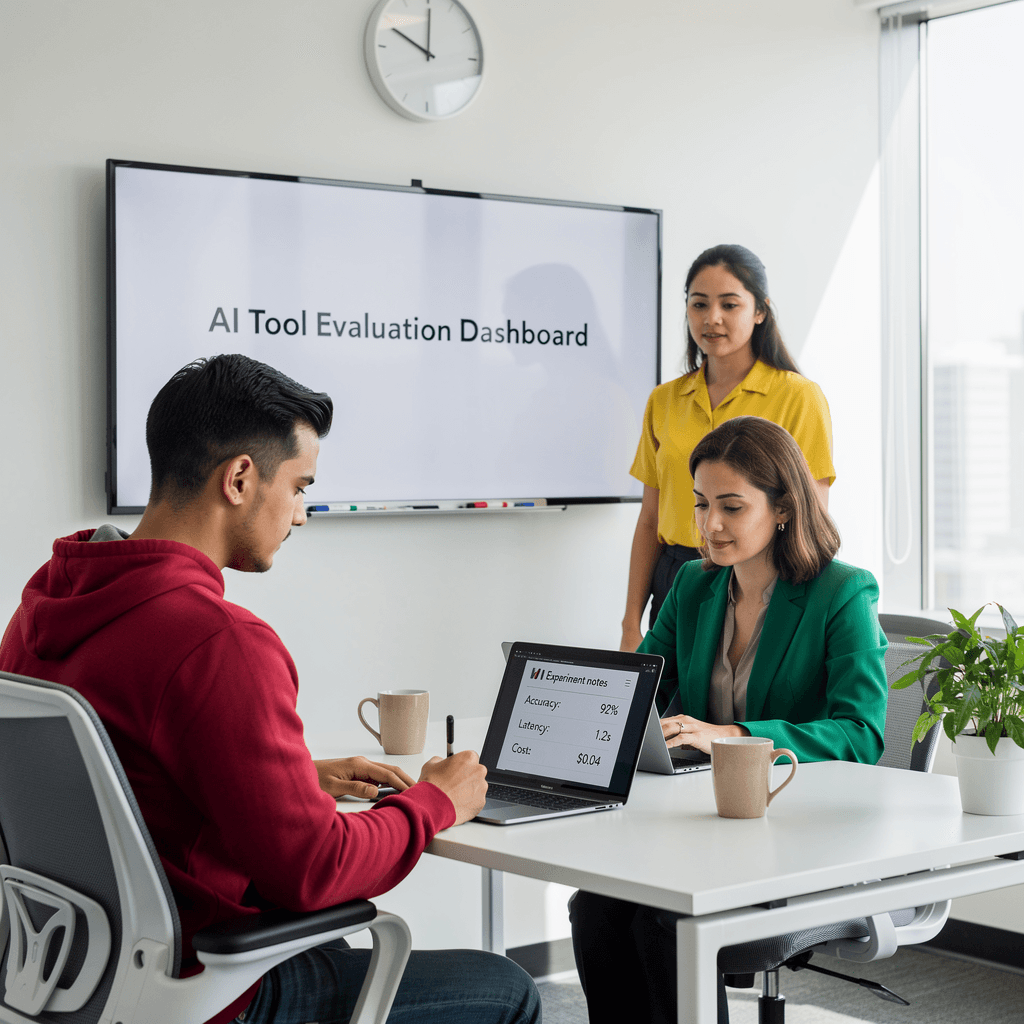
Qwen Image 2.0 wins the visual quality category for best AI text to image generation — scoring 86/100 on stylistic, the highest of any model tested. The image quality, photorealistic rendering, and natural color grading are exceptional. All 3 people in correct clothing. Whiteboard text correct. Laptop metrics present. 2 coffee mugs. 1 plant. Natural soft lighting throughout.
✗ Where it failed
Critical spatial failure that any text to image generation user would immediately notice — man in red hoodie sitting to the RIGHT instead of required LEFT. Clock shows approximately 1:15 — one of the worst clock failures in the entire benchmark. Blurry text flagged as minor forbidden element. Integrity score (56) below pass threshold — 3 of 5 dimensions failed despite the exceptional visual quality.
🚩 Issues Flagged
wrong spatial position (right not left)clock 1:25 vs 10:15blurry text (minor)integrity 56 below pass
6
GPT Image 1.5
69/100 — highest alignment (97) in the entire text to image generation test, stylistic collapsed to 15
69/100
🎨 Visual Q: 43/100
Alignment97✓ Pass
Consistency80✓ Pass
Stylistic15✗ Fail
Perceptual70✓ Pass
Integrity90✓ Pass
✓ What it got right
The highest alignment score of any model in this text to image generation benchmark — 97/100. All required entities matched with exceptional precision. All 3 people with exact clothing. Correct spatial positioning. Whiteboard text exact. Laptop metrics all three correct. Clock close to 10:15. 2 coffee mugs. 1 plant. Strong integrity — 90/100. In pure prompt understanding, no model comes close to GPT Image 1.5 in this test.
✗ Where it failed
Stylistic score catastrophically low — 15/100. This is the most dramatic single-dimension failure in the entire text to image generation benchmark. Studio lighting described as primary source rather than natural daylight. Minor hand awkwardness flagged. The result is the clearest cautionary tale across both studies — 97/100 on one dimension and 15/100 on another, dragging an otherwise exceptional performance to 69 overall. Always evaluate all 5 dimensions.
66/100 — confirms Midjourney's known weakness on structured text to image generation prompts
66/100
🎨 Visual Q: 56/100
Alignment78✓ Pass
Consistency60✗ Fail
Stylistic41✗ Fail
Perceptual70✓ Pass
Integrity82✓ Pass
✓ What it got right
Exactly 3 people with correct clothing. Man with tablet. Whiteboard text visible. 1 plant. Clock showing approximately 10:15 — one of the better clock results in the benchmark. Good integrity — 82/100. Natural ambient lighting from windows. The visual quality of the output is strong for a text to image generation result — the image itself is beautiful even if the instructions were not fully followed.
✗ Where it failed
Critical spatial failure — man in red hoodie sitting to the RIGHT of the woman with laptop, not LEFT as required by the text to image generation prompt. Laptop screen metrics not clearly readable — $0.04 shows as '$04'. Coffee mug count ambiguous — 2–3 visible. Stylistic score (41) well below pass threshold. This confirms Midjourney's documented weakness on structured text to image generation — it produces beautiful images that frequently ignore exact spatial constraints. Note: compare this 66/100 result to Midjourney's 93/100 in our photorealism test — same model, completely different prompt type, dramatically different result.
🚩 Issues Flagged
wrong spatial position (right not left)laptop '$04' not '$0.04'mug count ambiguousstylistic 41 below pass
8
Imagen 4.0
65/100 — Google's text to image generation model, spatial and count failures across 4 dimensions
65/100
🎨 Visual Q: 65/100
Alignment68✗ Fail
Consistency60✗ Fail
Stylistic60✗ Fail
Perceptual70✓ Pass
Integrity68✗ Fail
✓ What it got right
All 3 people with correct clothing. Whiteboard text correct. Laptop dashboard showing required metrics. Photorealistic quality with natural office environment. Perceptual score passes at 70 — the image quality itself is solid for a text to image generation output. Only 1 dimension passed at threshold level.
✗ Where it failed
Spatial failure — man positioned to the RIGHT not LEFT — a fundamental text to image generation instruction that Imagen 4.0 missed. At least 3 coffee mugs instead of exactly 2 — forbidden element violation. At least 2 plants instead of exactly 1 — another forbidden element. Clock shows ~10:50 not 10:15. Man writing on paper not tablet. Halo artifact noted. Jewel tone palette violates natural colors requirement. Four of five dimensions failed — only perceptual passes in this text to image generation result.
63/100 — man writing on notebook not tablet, a basic text to image generation failure
63/100
🎨 Visual Q: 58/100
Alignment77✓ Pass
Consistency70✓ Pass
Stylistic46✗ Fail
Perceptual70✓ Pass
Integrity50✗ Fail
✓ What it got right
All 3 people with correct clothing and correct spatial positioning — one of the few models to get the left/right positioning right in this text to image generation benchmark. Whiteboard text correct. Exactly 2 coffee mugs — correct count. 1 plant. Soft diffused natural lighting. Good alignment (77) and consistency (70) scores.
✗ Where it failed
Man writing on a notebook rather than a tablet — a straightforward text to image generation instruction that was ignored. Clock shows ~10:00 instead of 10:15. Laptop metric labels differ from the required exact text. Palette described as vibrant yellow, emerald, burgundy — not the natural colors the text to image generation prompt specified. Stylistic (46) and integrity (50) both significantly below pass threshold.
🚩 Issues Flagged
notebook not tabletclock ~10:10metric labels differvibrant palette vs naturalartifact (minor)
10
Juggernaut Flux Pro
56/100 — alignment collapsed to 22, catastrophic text to image generation failure on core elements
56/100
🎨 Visual Q: 67/100
Alignment22✗ Fail
Consistency60✗ Fail
Stylistic63✗ Fail
Perceptual70✓ Pass
Integrity88✓ Pass
✓ What it got right
All 3 people with correct clothing colors and correct positioning. Modern office setting. Natural soft lighting. Strong integrity — 88/100. Photorealistic quality — perceptual passes at 70. The visual output looks good even if the text to image generation prompt compliance is weak.
✗ Where it failed
Catastrophic alignment score — 22/100, the lowest of any model in this text to image generation benchmark. Tablet missing — man writing on paper. Clock shows ~10:10. Whiteboard text partially visible but not clearly readable. Laptop dashboard metrics not displaying required values. Only 1 coffee mug instead of 2. 2 plants instead of 1. The gap between visual quality and text to image generation compliance could not be more stark — strong integrity but catastrophic alignment.
54/100 — wrong laptop interface entirely, 4–5 coffee mugs in a text to image generation prompt that asked for exactly 2
54/100
🎨 Visual Q: 59/100
Alignment40✗ Fail
Consistency40✗ Fail
Stylistic47✗ Fail
Perceptual70✓ Pass
Integrity88✓ Pass
✓ What it got right
3 people present. Whiteboard title text correct. Natural lighting. Man in red hoodie on left — correct spatial positioning. Strong integrity — 88/100. The photorealistic quality of the scene itself is acceptable for a text to image generation output.
✗ Where it failed
At least 4–5 coffee mugs visible instead of the exactly 2 specified in the text to image generation prompt — one of the worst object count failures in the benchmark. Multiple plants instead of 1. Clock ~10:10. Laptop shows a completely different interface — not the required dashboard with exact metrics. Man writing on paper not tablet. Both alignment (40) and consistency (40) well below pass threshold — this model fundamentally failed to follow the text to image generation instructions despite producing a visually acceptable scene.
52/100 — shirt not blazer, whiteboard text illegible, weak text to image generation compliance
52/100
🎨 Visual Q: 56/100
Alignment49✗ Fail
Consistency40✗ Fail
Stylistic42✗ Fail
Perceptual70✓ Pass
Integrity72✓ Pass
✓ What it got right
3 people with approximately correct positioning. Photorealistic style. Natural lighting. Scene composition believable. Integrity passes at 72 — no major forbidden elements. The basic text to image generation scene is recognisable even if the specifics are wrong.
✗ Where it failed
Woman at laptop wears a green shirt not a blazer — a specific clothing instruction in the text to image generation prompt that was ignored. Whiteboard text illegible — does not show the required "AI Tool Evaluation Dashboard" text. Laptop dashboard doesn't show exact required metrics. Only 1 coffee mug instead of exactly 2. Clock time unverifiable. Blurry text flagged as forbidden element. Three of five dimensions failed in this text to image generation result.
🚩 Issues Flagged
shirt not blazerwhiteboard text illegibleonly 1 coffee mugblurry text (forbidden)clock unverifiableartifact, blur
13
Kling 3.0 Omni
48/100 — lowest text to image generation score, transposed metrics, clock shows 6:30 — but scores 93/100 on photorealism
48/100
🎨 Visual Q: 50/100
Alignment52✗ Fail
Consistency60✗ Fail
Stylistic30✗ Fail
Perceptual70✓ Pass
Integrity40✗ Fail
✓ What it got right
All 3 people with correct clothing colors. Correct spatial positioning. Whiteboard text "AI Tool Evaluation Dashboard" correct. Natural daylight lighting. Modern office setting. Perceptual quality passes at 70. The scene itself is photorealistic — Kling's strength — even when the text to image generation instruction compliance fails.
✗ Where it failed
Laptop metrics critically wrong — Latency and Cost values transposed in the text to image generation output ('Latency: $0.04' instead of 'Latency: 1.2s'). Only 1 coffee mug instead of required 2. Clock shows approximately 4:30 — the worst clock failure across all 21 models tested in both studies combined. Stylistic (30) and integrity (40) severely failed. 4 of 5 dimensions failed. This result directly contrasts with Kling's 93/100 on our photorealism test — proving that best AI models for text to image generation accuracy and photorealism are completely different capabilities.
🚩 Issues Flagged
metrics transposed — worst failureonly 1 coffee mugclock 6:30 — worst across all 21 modelsstylistic 30/100integrity 40/100artifact (minor)
📊 KEY FINDINGS
What the best AI models for text to image generation benchmark tells us about picking the right model.
1. GPT Image 2.0 is the best AI model for text to image generation accuracy. Scoring 82/100 — the highest across all 21 models tested in both studies combined — GPT Image 2.0 is the only model to pass all 5 DeepEval dimensions simultaneously on a complex structured prompt. It beats Kittl's 74/100 from the 7-tool study and sets the new benchmark for text to image generation compliance.
2. Visual quality and text to image generation accuracy are separate capabilities. Qwen Image 2.0 wins visual quality (78/100) but scores only 70/100 overall — due to a critical spatial positioning failure. GPT Image 2.0 wins accuracy (82/100) with a visual quality of 76/100. The best AI model for text to image generation accuracy is not the most visually beautiful — and vice versa. Your use case determines which matters more.
3. GPT Image 1.5 is the clearest cautionary tale in the entire benchmark. 97/100 alignment — the highest of any model tested across both studies. But 15/100 stylistic — a catastrophic collapse that dragged overall to 69. One dimension failure can destroy an otherwise excellent text to image generation result. Always evaluate all 5 dimensions before concluding a model is performing well.
4. Clock time is the hardest text to image generation element. Across all 14 models tested, only GPT Image 2.0 came close to the required 10:15 — showing ~10:17. Kling 3.0 Omni showed 6:30 — the worst clock result across all 21 models in both studies. Exact time rendering on analog clocks remains an unsolved text to image generation challenge for every model available today.
5. Seedream 5.0 shows major version improvement on text to image generation. Original Seedream scored 68/100 in the 7-tool study. Seedream 5.0 scores 79/100 here — an 11-point improvement. Bytedance has made significant text to image generation compliance gains between versions. When evaluating best AI models for text to image generation, version matters as much as model family.
6. Kling 3.0 Omni — last here, first in photorealism. Scoring 48/100 in this best AI models for text to image generation test — and 93/100 in our photorealism benchmark. This is the most dramatic cross-study reversal in both datasets. Kling cannot follow structured text to image generation instructions precisely — but it produces the most visually compelling photorealistic output. Know what you need before choosing.
7. Auto mode is unreliable for structured text to image generation. OpenART Auto scored 78/100 — third highest — but the result cannot be attributed to any specific model and cannot be reproduced. For professional text to image generation workflows where consistency and attribution matter, Auto mode should never be used. Select a specific model every time.
Best AI model for text to image generation accuracy: GPT Image 2.0
82/100. All 5 dimensions passed. The only model in this text to image generation benchmark to achieve this. Strongest alignment and consistency (both 90). New benchmark leader across all 21 models in both studies.
Best visual quality for text to image generation: Qwen Image 2.0
78/100 visual quality. Highest stylistic score of all 14 models — 86/100. Best visual output in this text to image generation benchmark. For creative work where visual quality matters more than exact compliance — Qwen Image 2.0 is the top choice.
Best AI models for text to image generation — your questions answered.
GPT Image 2.0 is the best AI model for text to image generation accuracy — scoring 82/100 overall, the highest across all 21 models tested in both studies combined. It excelled on alignment (90) and consistency (90), passing all 5 DeepEval dimensions simultaneously — the only model to achieve this on a complex structured text to image generation prompt.
Qwen Image 2.0 scored highest for visual quality in this text to image generation benchmark — 78/100 combined Stylistic + Perceptual score, with a stylistic score of 86/100 — the highest of any model. If visual output quality matters more than strict instruction compliance for your text to image generation use case, Qwen Image 2.0 is the top choice on OpenART AI.
For structured text to image generation, GPT Image 2.0 significantly outperforms Midjourney v8.1 — scoring 82/100 vs 66/100. GPT Image 2.0 passed alignment (90 vs 78), consistency (90 vs 60), and all 5 dimensions. Midjourney failed on spatial positioning — placing the man on the right instead of the required left. However, in our photorealism benchmark, Midjourney scored 93/100 — joint first. The best AI model for text to image generation accuracy and photorealism are different tools.
Overall Score in this text to image generation benchmark is the reported score across all 5 DeepEval dimensions: Alignment, Consistency, Stylistic, Perceptual, and Integrity. Visual Quality Score combines only Stylistic and Perceptual divided by 2 — measuring how beautiful and artifact-free the generated image looks, regardless of whether it followed the text to image generation prompt instructions precisely.
GPT Image 1.5 scored 97/100 on alignment — the highest of any model across both text to image generation studies. However its stylistic score collapsed to 15/100, dragging its overall score to 69. GPT Image 2.0 balanced all five dimensions better at 82 overall. This is the most important lesson from this text to image generation benchmark — one dimension failure can completely undermine an otherwise excellent result. Always evaluate all 5 dimensions.
OpenART Auto scored 78/100 in this text to image generation benchmark — third highest. However the model it selected is not disclosed, so results cannot be attributed or reproduced. For professional text to image generation work where consistency and attribution matter — always select a specific model. For casual use where reproducibility is not required, Auto can produce strong results.
Kling 3.0 Omni scored 48/100 — lowest in this text to image generation test. Key failures: stylistic 30/100, integrity 40/100, only 1 coffee mug instead of 2, clock showing 6:30 instead of 10:15 (the worst clock failure across all 21 models tested), and laptop metrics with latency and cost values transposed. Importantly, Kling scored 93/100 on our photorealism benchmark — proving it excels at visual quality but not structured text to image generation instruction compliance.
The 7-tool text to image generation study tested Kittl, Krea, OpenART AI (Seedream model), Ideogram, Photoroom, Canva, and Adobe Express — with Kittl winning at 74/100. This deeper 14-model study tests models within OpenART AI specifically, with GPT Image 2.0 scoring 82/100 — beating Kittl and setting the new benchmark for best AI models for text to image generation accuracy across all 21 models in both studies.
Qwen Image 2.0 wins visual quality in this text to image generation benchmark (78/100) but scores 70/100 overall — tied 4th. Its critical failure was spatial positioning: the man in red hoodie was placed on the RIGHT instead of the required LEFT. For text to image generation where exact spatial compliance matters — GPT Image 2.0 is the stronger choice. For text to image generation where visual quality is the priority — Qwen Image 2.0 excels.
For text to image generation requiring photorealistic people with precise instruction compliance, GPT Image 2.0 and Seedream 5.0 performed best. GPT Image 2.0 showed the most accurate anatomy and instruction following. Seedream 5.0 produced consistently natural-looking faces and body proportions with a strong 79/100 overall score — an 11-point improvement over the original Seedream. For pure photorealism without structured constraints, see our best AI models for photorealistic images test.